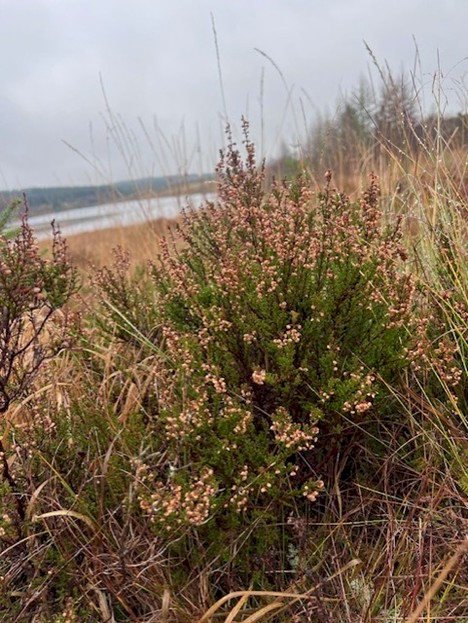
On a bog in the middle of County Mayo, Ireland, I confirmed that rewilding is a movement rooted in awareness and compassion. Walking across a bog soaked in moisture and emerging care, I was guided by Bettina and Georg Peterseil who had opened their home to host our Irish Quaker retreat, “Rewilding the Light Together.” I led this retreat, where 15 people sought to rewild their spirits as they deepened their care for our Earth. This rewilding mindset supports resilience for people and for the land. The retreat blended Quaker Experiment with Light meditation with the rewilding conservation practices.
Bettina and Georg discovered a place to heal both the soul and the land. They restored the flow of the water into a nearby Loch, cared for the soil, and planted 3,000 native plants and trees. This land in Castlebar, Ireland, is part of a lake bog system located near Mount Nephim to the north, the sacred mountain of Croagh Patrick to the south, and a gentle stream flowing through the hillside to Lough Rusheen. In this place, a sense of connection through the moist earth beneath my feet, to the water flowing into a serene lake. The bog is now a protected, living landscape of mosses and heather, where grass and gorse thrive and share a palette of colors unique to this place. Birds can be heard throughout this area.
The bog acts as a record of heavy use and neglect; ridges and humps from potato rows and turf cuttings remain visible. A bog offers healing by releasing and processing what is unhealthy, clearing space for wellness to emerge. It creates a space to stop striving, release intellectual concepts, and embrace the feelings of being, awareness, and co-creation of a deeper reality. The Peterseil family understood that the way forward was to build their home in harmony with nature, and live in the Light with the Earth.
They had not realized that, while the land healed and the sphagnum moss, native oak, beech, spruce, and yew grew, the health of the bog would also be restored. The Peterseils stopped drainage and turf-cutting and created compost to restore the soil. Indeed, they have a significant compost pile and had not planned to import earthworms, which are essential for creating healthy soil. To their surprise, earthworms soon appeared in the compost on their own! In clumps of pink bodies, the worms turned the compost into new soil used for the gardens that support the homestead. Bettina says, “We continue to learn how to transform waste into gold and serve the land and trees in the future. It was symbolic of transforming something dark into something beautiful; darkness into Light.”
Architects, ecological conservationists and Friends learn from this family and the land. The Peterseils don’t seek attention; they live their intention. They learned the language of rewilding, practise sacred silence, and share their story – their intuitive journey of rewilding this bog.
Jeanne Marie Mudd